
THE DEAN
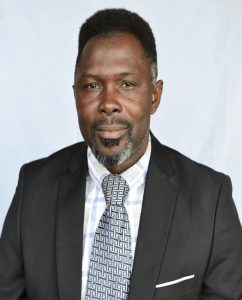
Gilbert Samukonga has made significant contributions to the field of engineering and technology, particularly in metallurgical, electronics and materials engineering. His publications focus on various aspects of energy systems, including photovoltaic technology, storage and mini-grid systems. Here are some of his notable works:
Photovoltaic Technology(PV/T): Samukonga has explored the efficiency of photovoltaic thermal hybrid collectors, revealing that thermal efficiency can reach up to 71.80% and electrical efficiency can be increased to 23% from a standard reference value of 14% for monocrystalline solar cells. His research also investigates the impact of temperature on the performance of photovoltaic cells.
Mini-Grid Systems: His systematic review of mini-grid systems highlights the role of hybrid renewable energy systems in enhancing energy resilience, especially in low- and middle-income countries. The review discusses technological innovations, policy considerations, and barriers to mini-grid deployment.
Cloud Computing and Big Data: Samukonga’s literature review on cloud computing and big data processing provides insights into the platforms, cloud architecture, cloud database, and data storage schemes. It also addresses open issues and challenges in big data analysis in cloud computing platforms.
Modelling. He has been modelling electronic and physical properties of materials such as BC5 materials.
These publications reflect Samukonga’s expertise and commitment to advancing knowledge in engineering and technology, particularly in the context of climate-resilient energy transitions and sustainable energy systems
1. Gilbert Samukonga (Department of Physics) – April 2026
Title: Challenges, Prospects and Strategic Pathways for Lithium-ion Battery Industry Development in Zambia: A Systematic Review: DOI: 10.9734/JENRR/2026/v18i4506
2. Gilbert Samukonga (Department of Physics) – March 2026
Title: Advancing Climate-Resilient Energy Transitions: A Systematic Review of Mini-grid Design and Implementation: DOI: 10.9734/JENRR/2026/v18i3500
This research focuses on climate-resilient energy transitions by reviewing the design and implementation of mini-grid systems. The study contributes to sustainable energy development and provides insights into improving energy accessibility through resilient infrastructure.
3. Silwizya, C. S., Mwaba, N. M., & Samukonga, G. (2025). A Systematic Literature Review on inhibitors and challenges in Cloud Computing as a Platform for Big Data Storage and Analysis. Proceedings of International Conference for ICT (ICICT) – Zambia, 7(1), 466–473. Retrieved from https://ictjournal.icict.org.zm/index.php/icict/article/view/419.
4. G. Samukonga, A. Habanyama and N. K. Mumba, “Stability and elastic anisotropy of diamond related C8-yBy materials”, International Journal of Physical Sciences, 16(1) (2021) 16-28. DOI: 10.5897/ijps2020.4920;
5. G. Samukonga and A. Habanyama, “Electronic properties, high pressure phase stability and elastic anisotropy of BC5”, Scientific African, Elsevier, 11 (2021) e00710. DOI: 10.1016/j.sciaf.2021.e00710;
6. G. Samukonga , A. Habanyama, and N. K. Mumba, “High Pressure Phase Stability,Elastic Anisotropy and Electronic Properties of BC2N”, International Journal of the Physical Sciences, 16(4) (2021) 146-157. https://doi.org/10.5897/IJPS2020.4929;
7. A. Habanyama, M. Msikita, J. Simfukwe, G. T. Baliga, N. K. Mumba, M. Mulenga and G. Samukonga, “Study of Ultra-Hard Materials of the B-C-N-O quaternary system”,Results in Physics, 11 (2018) 984-993. DOI: 10.1016/j.rinp.2018.10.063.
8. Samukonga G, Manyala R and Hatwaambo ,”Construction and evalution of a PV/T collector under steady state using the batch method”, international journal of energy and environment , (2016).
ABOUT THE SCHOOL OF MATHEMATICS AND NATURAL SCIENCE
Mukuba University is one of the three transformed Teacher Training Colleges into Universities, established by the Higher Education act of 2013. The transformation is to create a university focusing on Teaching, Research and Innovation for national development. Its previous primary role was to produce teachers for Science, Mathematics and Technology related subjects. The forerunner of Mukuba University is Copperbelt Secondary Teachers’ College (COSETCO), which has provided valuable historical experiences on which the new University is supported. Using this firm foundation and recent government’s decision to put Mukuba University under the Copperbelt University Council, Mukuba University is now fast launching itself as a reputable University that can compete favourably with other Universities specialising not only in the fields of Mathematics and Science education but also mathematics, natural sciences, innovation, allied health professions, health sciences, ICT and business studies for national development. Currently, the University has four Schools, namely; School of Mathematical and Natural Sciences, School of Applied Sciences and Technology, School of Education and School of Postgraduate Studies.
The Year 2020 has seen the fastest expansion of the Mukuba University since its inception. As part of this rapid expansion, the university introduced the Institute of Biomedical and Health Sciences (IBHS). The Institute will be offering Programmes at Diploma, BSc, MSc and PhD level starting from Year 2021. Furthermore, the institute will have all the capabilities to offer online short intensive courses. In addition to the Schools and the Institute, Mukuba University has now the Centre for Professional and Extension Studies (CPES)that is offering Online Short intensive courses in various fields. In order to advance Research and Innovation of the highest international standards, the School of Postgraduate Studies was created in addition to the Directorate of Research and Innovation. These are currently managed by well experienced full time academic staff. It is envisioned that Mukuba University will become the powerhouse of Research and Innovation.
STRATEGIC OBJECTIVES OF SMNS
- To promote and maintain academic excellence in Teaching, Learning, Research, Innovation, and Consultancy
- To review programmes in order to assess their effectiveness and accessibility by relevant beneficiary in view of the university status with appropriate trained staff.
- To increase access of all SMNS programmes to students from rural areas
- To embark on an aggressive programme of rehabilitating the old infrastructure and also develop appropriate infrastructure to support institutional activities
- To design a comprehensive and diversified University curriculum with relevant linkages to other educational levels and to the needs of socio-economic development
- To enhance financial sustainability and management, and expand sustainable financial resources base
- To develop a framework to co-ordinate provision of the open and distance education, and promote satellite university points throughout the country
- To improve the learning environment by provision of state of the art technology in all classrooms and library
- To increase the research and innovation output of the SMNS academic staff
- To rebrand and market Mukuba University